
How Infrared Video-Nystagmography Drives Accurate Diagnosis
Many vestibular conditions are paroxysmal: dizziness attacks occur intermittently at home, at work, or during specific head positions. Traditional clinic exams without eye recording often miss the brief burst of nystagmus that reveals exactly which semicircular canal or neural pathway is responsible.
Why Visual Fixation Must Be Removed
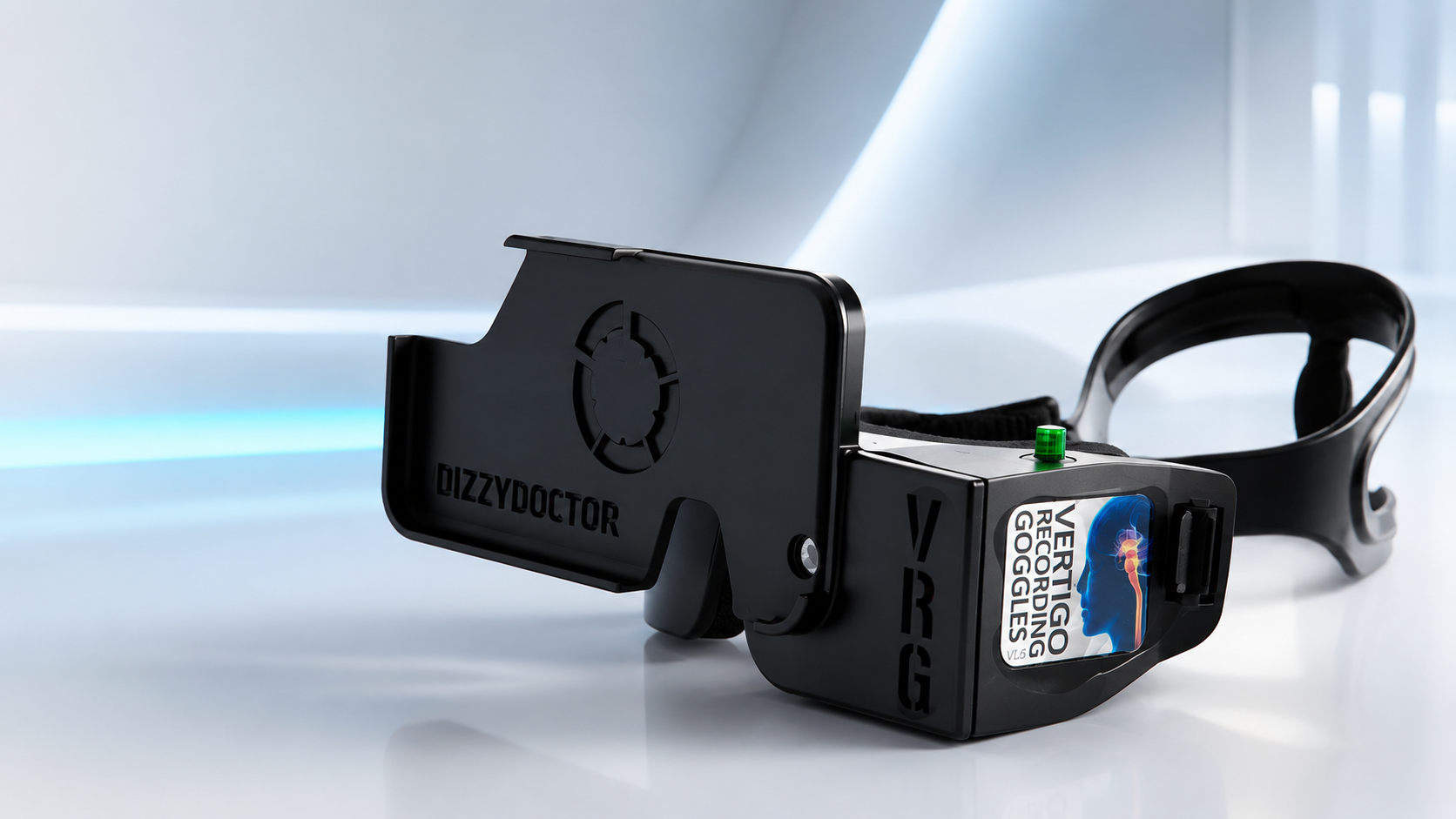
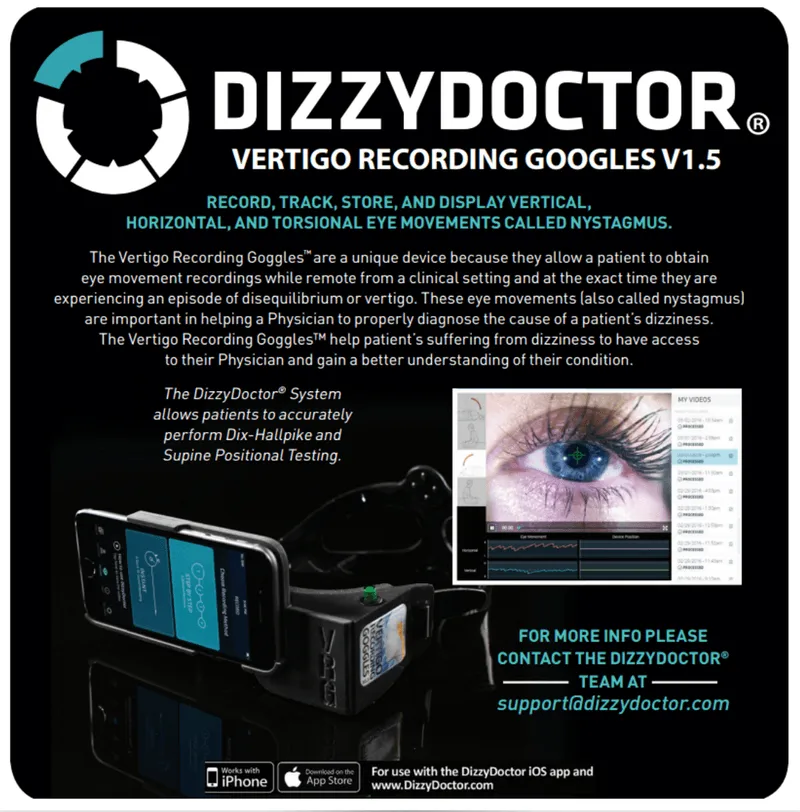
The human brain naturally uses visual landmarks (such as room walls or a doctor’s finger) to suppress vestibular nystagmus through cortical fixation pathways. The DizzyDoctor Goggles place the patient in total darkness while illuminated by infrared light invisible to the human eye, unmasking the purest vestibular response.
Key Conditions Evaluated with the Goggles
- Benign Paroxysmal Positional Vertigo (BPPV): Identifies torsional, upbeating, or horizontal nystagmus to pinpoint the posterior, horizontal, or anterior canal, and distinguishes canalithiasis (free-floating otoconia) from cupulolithiasis (adherent otoconia).
- Menière’s Disease: Captures the fluctuating paralytic vs. recovery nystagmus characteristic of endolymphatic hydrops flares.
- Vestibular Migraine: Evaluates central ocular patterns, pursuit abnormalities, and non-fatiguing positional nystagmus.
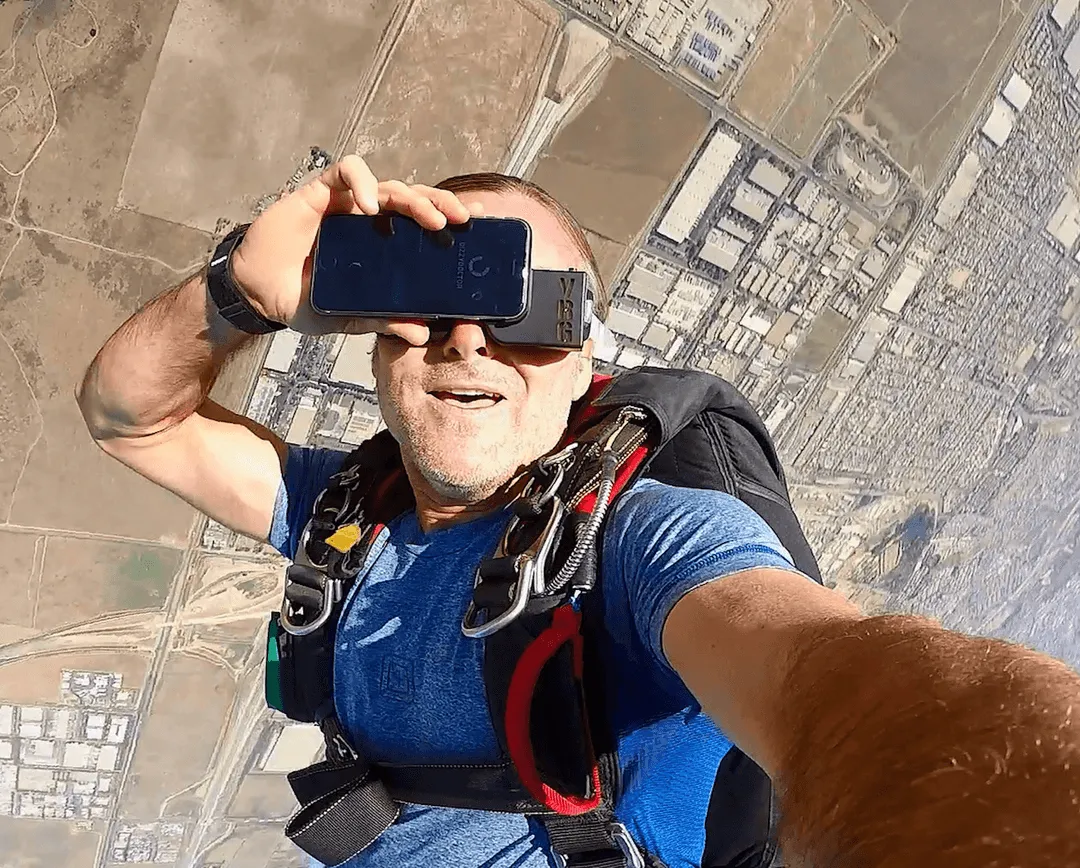
- Aviation Spatial Disorientation: Used by Dr. Purcell in-flight to record aviator eye movements under multi-axis gravitational transitions and cockpit turbulence.
What to Expect During Your Evaluation
The goggles are placed comfortably over your eyes and secured with an adjustable headstrap. Dr. Purcell or your clinician will guide you through diagnostic positioning maneuvers (such as the Dix-Hallpike and Supine Roll tests). The high-definition infrared eye feed is displayed in real-time, recorded, and reviewed with you during your visit so you can see your own eye movements and understand your diagnosis.