
Vision
The eyes provide a reference for the horizon, movement, and position. Darkness, clouds, and poor visibility can remove or distort that reference.
When motion, gravity, and the senses stop agreeing.
Dr. Ian Purcell combines vestibular neurophysiology, NASA-funded research, and practical flight experience to evaluate spatial disorientation in aviators.
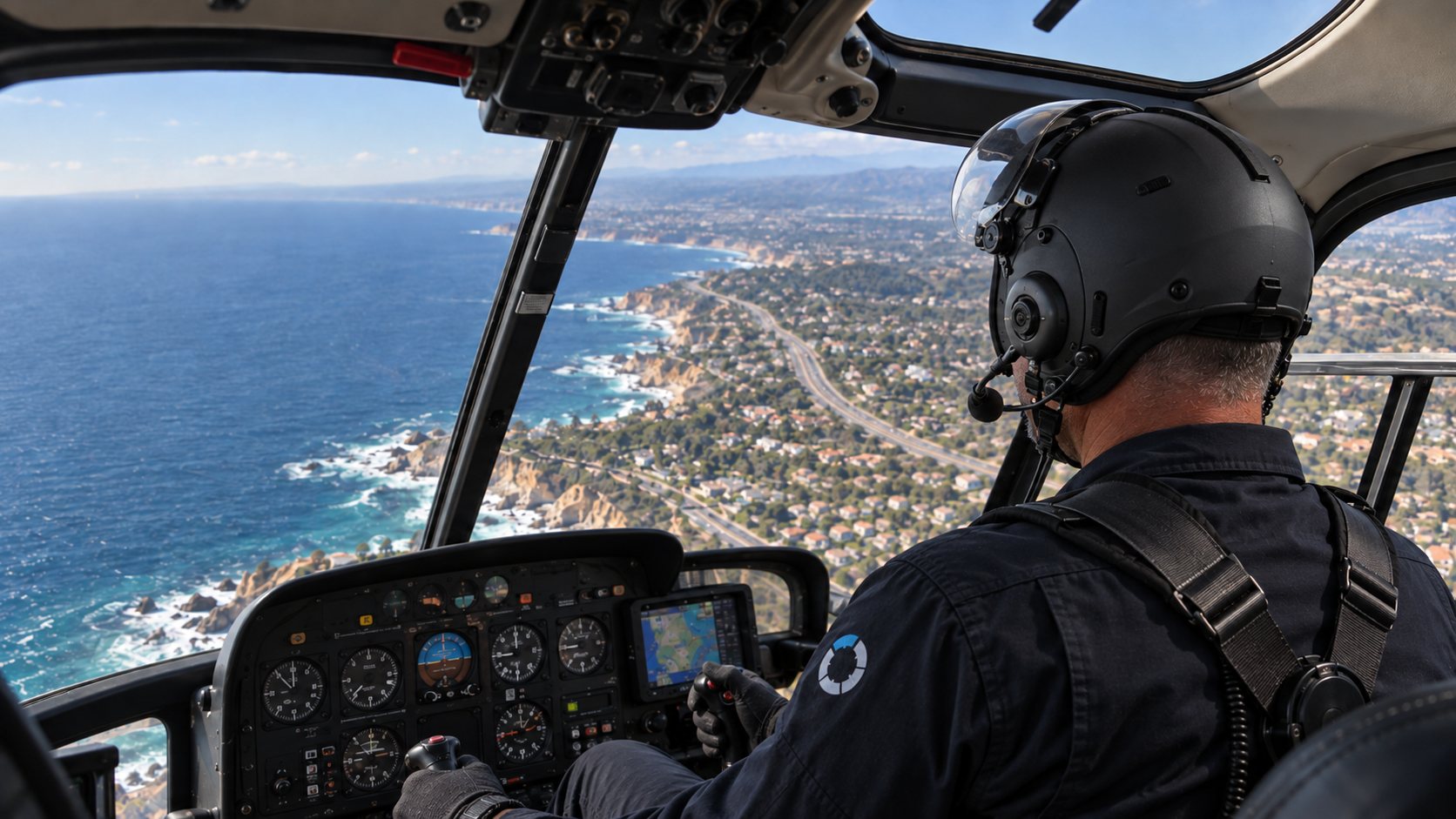
Dr. Purcell pairs vestibular neurophysiology with experience flying complex fixed-wing aircraft and rotorcraft.
NASA & aerospace research01 / The sensory system
Spatial disorientation is a mistaken perception of position, motion, or attitude. Without a reliable visual horizon, acceleration and turning can create a convincing impression that differs from the aircraft’s actual movement.
The eyes provide a reference for the horizon, movement, and position. Darkness, clouds, and poor visibility can remove or distort that reference.
The semicircular canals sense rotational acceleration. The otolith organs sense linear acceleration and gravity, but cannot reliably distinguish one from the other during flight.
Pressure and signals from muscles and joints contribute to the feeling of position. In flight, these “seat-of-the-pants” sensations can be misleading.
A normal sensory system can still be fooled. An in-flight illusion does not by itself establish an underlying vestibular disorder.
02 / In flight
Several well-described flight illusions arise when the inner ear interprets motion without a dependable visual reference.
A slow bank may go unnoticed by the inner ear. Returning to level flight can then feel like banking in the opposite direction.
Rapid forward acceleration can feel like the aircraft is pitching up. Rapid deceleration can produce the opposite sensation.
An abrupt head movement during a prolonged turn can stimulate the semicircular canals in a different plane and create a powerful tumbling sensation.
03 / Clinical Avionics & Sensory Integration
A flight deck keeps its bearings with gyroscopes and an artificial horizon. You keep yours with vision, the inner ear, and the feel of your own body. Spatial disorientation is what happens when acceleration makes that second set disagree with the first.
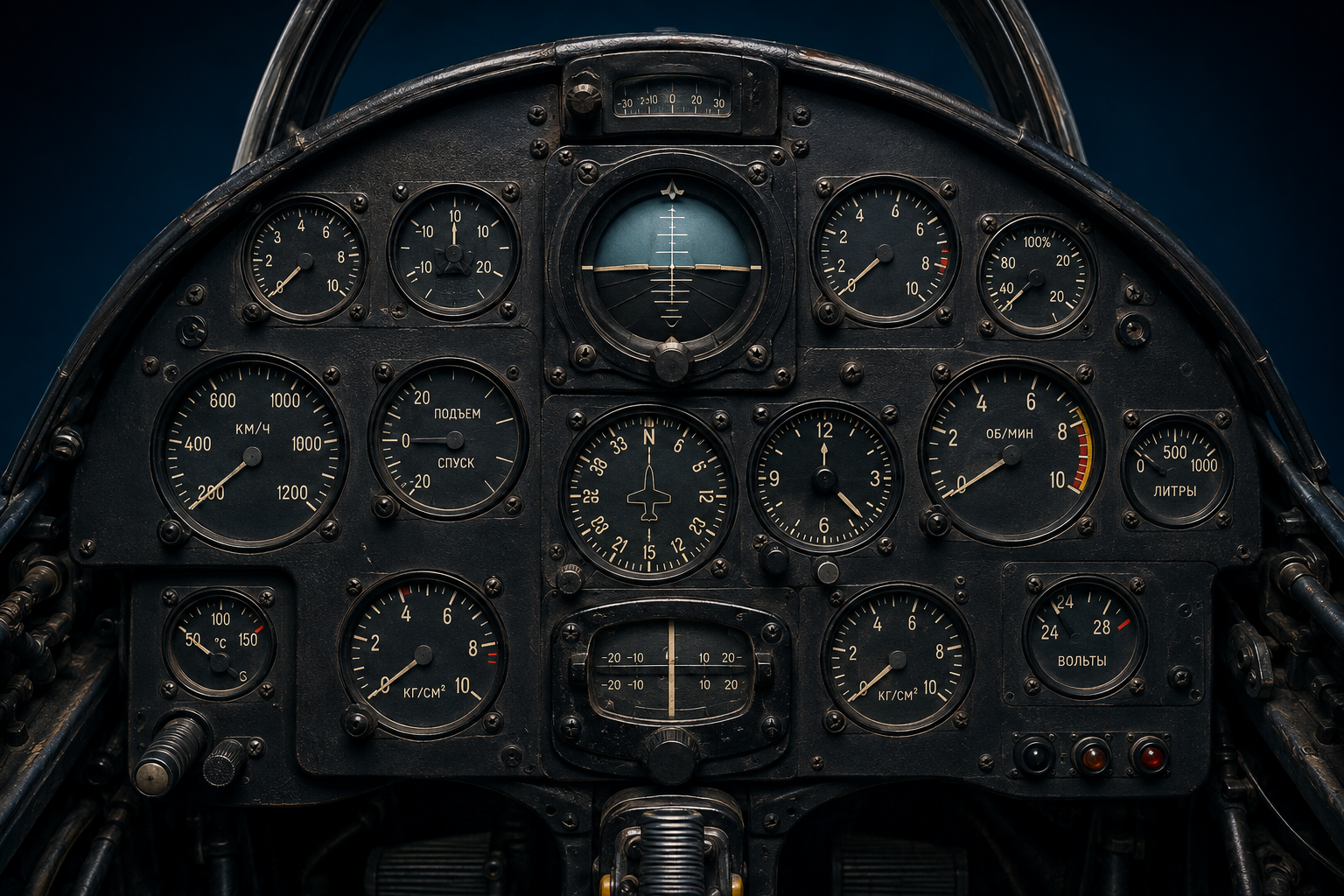
The visual system delivers approximately 80% of spatial orientation cues under visual meteorological conditions (VMC). In flight, entering cloud decks, haze, or night conditions with a false horizon (such as slanted cloud tops or shoreline city lights) deprives the brain of objective retinal slip reference, causing rapid visual-vestibular dissociation.
Clinically, we evaluate how visual fixation suppresses abnormal vestibular nystagmus using infrared Video-Nystagmography (VNG), assessing central vs. peripheral vestibular pathway integrity.
Explore Video-Nystagmography (VNG)The inner ear houses three orthogonal semicircular canals sensing angular acceleration and two otolith organs (utricle and saccule) sensing gravity and linear acceleration. Sustained turns lead to endolymph equalization—causing the brain to perceive zero rotation (The Leans). Furthermore, the brain cannot distinguish linear aircraft acceleration from gravitational pitch (Somatogravic illusion).
Using 360-degree mechanical rotational platforms (TRV and Epley Omniax chairs), we isolate specific semicircular canals to evaluate cupular mechanics and restore otolithic alignment.
Explore Multi-Axial TRV & Omniax SystemsDeep tissue mechanoreceptors in the musculoskeletal system provide "seat-of-the-pants" sensations. During coordinated bank turns, centrifugal forces increase the net gravito-inertial vector downward through the cockpit seat, leading pilots to falsely perceive the aircraft as wings-level even while descending in a steep spiral.
We quantify the somatosensory contribution to balance using computerized force plates, measuring postural sway when surface and visual references are systematically disrupted.
Explore Balance & Posturography AssessmentNASA sensorimotor research
In aerospace missions, transitioning between 1G, microgravity (0G), and hyper-gravity environments alters otolith weightlessness and gaze stabilization. Dr. Purcell’s six years of NASA-funded vestibular research informs our clinic’s approach to sensory re-adaptation, space motion sickness, and complex aviator rehabilitation protocols. Explore NASA’s sensorimotor risk research ↗
Eye-movement recording
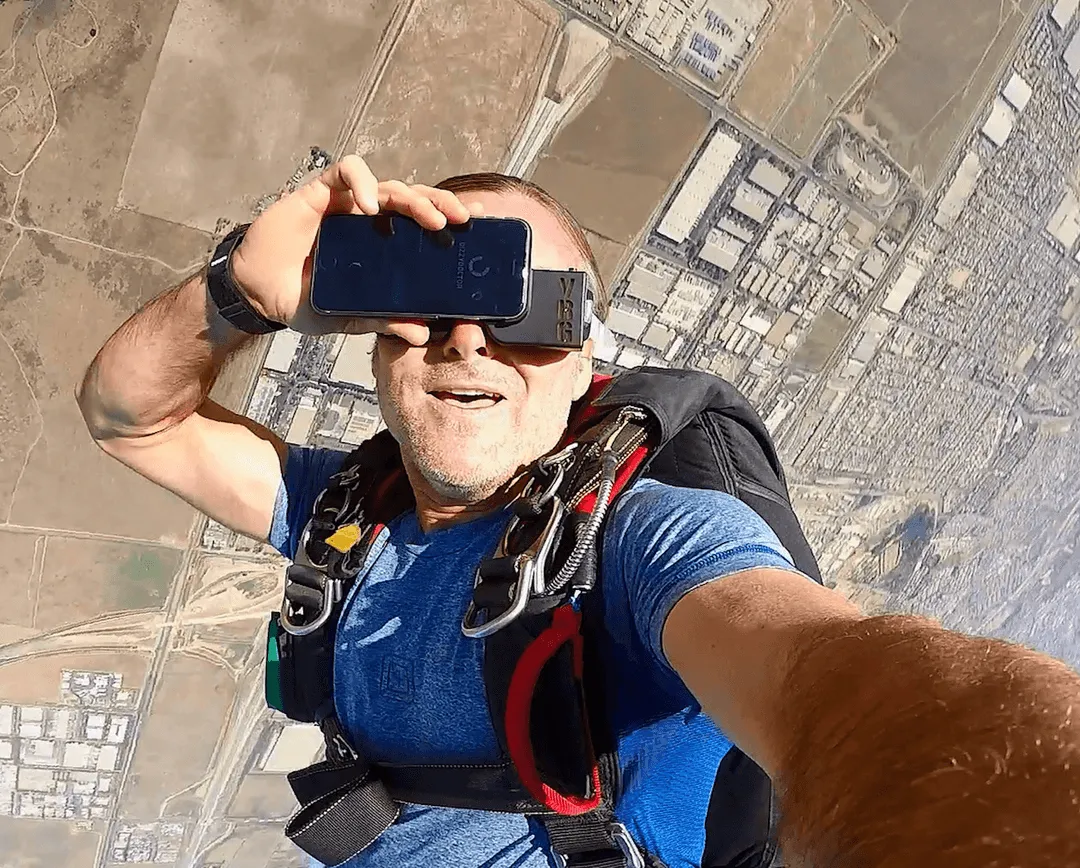
Light-tight cups and infrared cameras record both eyes at once, while a hinged cradle holds the phone that captures them. Built for the exam room and for the aircraft.
Open the full goggles page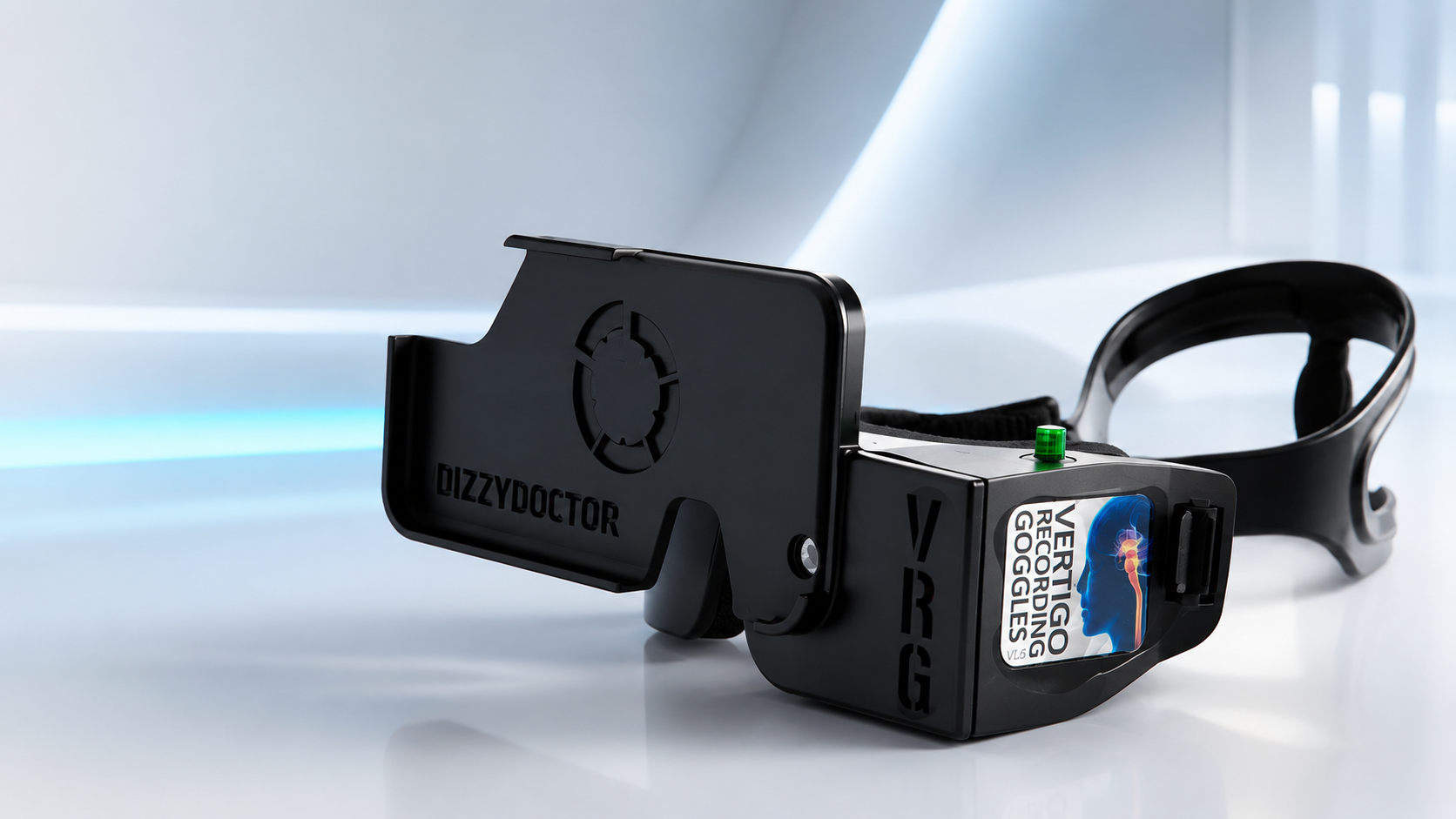

05 / In the field
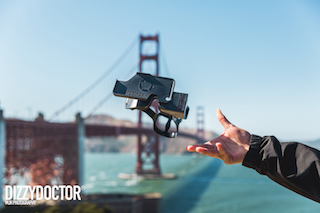
A quiet exam room cannot provoke what a cockpit provokes. Recording the vestibular system in flight is how this practice learns what the healthy response to real acceleration looks like — which is what makes an abnormal one recognizable.

Spatial disorientation happens under sustained turns, rapid acceleration, and changing gravity — none of which exist in a clinic. Taking eye-movement recording into the aircraft closes that gap: it captures the vestibular system while the confusing forces are actually acting on it, so the clinic has a reference for what the same patient's eyes do on the ground.
The otolith organs cannot separate the pull of gravity from the acceleration of the machine — they report the sum of the two. On a rocket belt that resultant shifts with every change in thrust, so the pilot's sense of “up” is set by the vehicle as much as by the earth. It is the somatogravic illusion described above, with the visual horizon and the instrument panel both taken away.
Dr. Purcell joined the Vestibular Neurophysiology Laboratory of Adrian A. Perachio, PhD in 1991 and held six years of funding from the NASA Graduate Training Grant and the Texas Space Grant Consortium as a principal investigator. That work asked how the otolith organs encode gravity and linear acceleration — including how utricular afferents respond to translational motion, and how the saccule contributes under hypergravity.
Research & publicationsKnowing how a healthy vestibular system behaves when it is being fooled is what allows an in-flight illusion to be separated from an underlying disorder — and it shapes rehabilitation for aviators around the specific motions their flying demands. Flight makes the ambiguity obvious; clinical evaluation makes it measurable. Testing informs care; it does not by itself decide aeromedical certification.
06 / Clinical perspective
Persistent or recurrent dizziness, vertigo, imbalance, or unusual motion sensitivity deserves clinical evaluation. The pattern of symptoms, neurologic examination, hearing history, and medication review help guide whether vestibular testing is appropriate.
Eye movement testingSee how infrared eye-movement recording helps evaluate vestibular and oculomotor function in clinic and in the field.
Explore the goggles Balance assessmentExplore how vision, vestibular input, and body sensation contribute to postural control.
Explore CDP Related conditionsUnderstand conditions that can affect balance, gaze stability, and spatial orientation.
Learn about vestibular careFurther reading
Research and background on sensory integration, balance assessment, and the clinical study.
Your next step
Explore more specialties and find a path to care.
Not sure where to begin?
Our team can help you plan your visit.